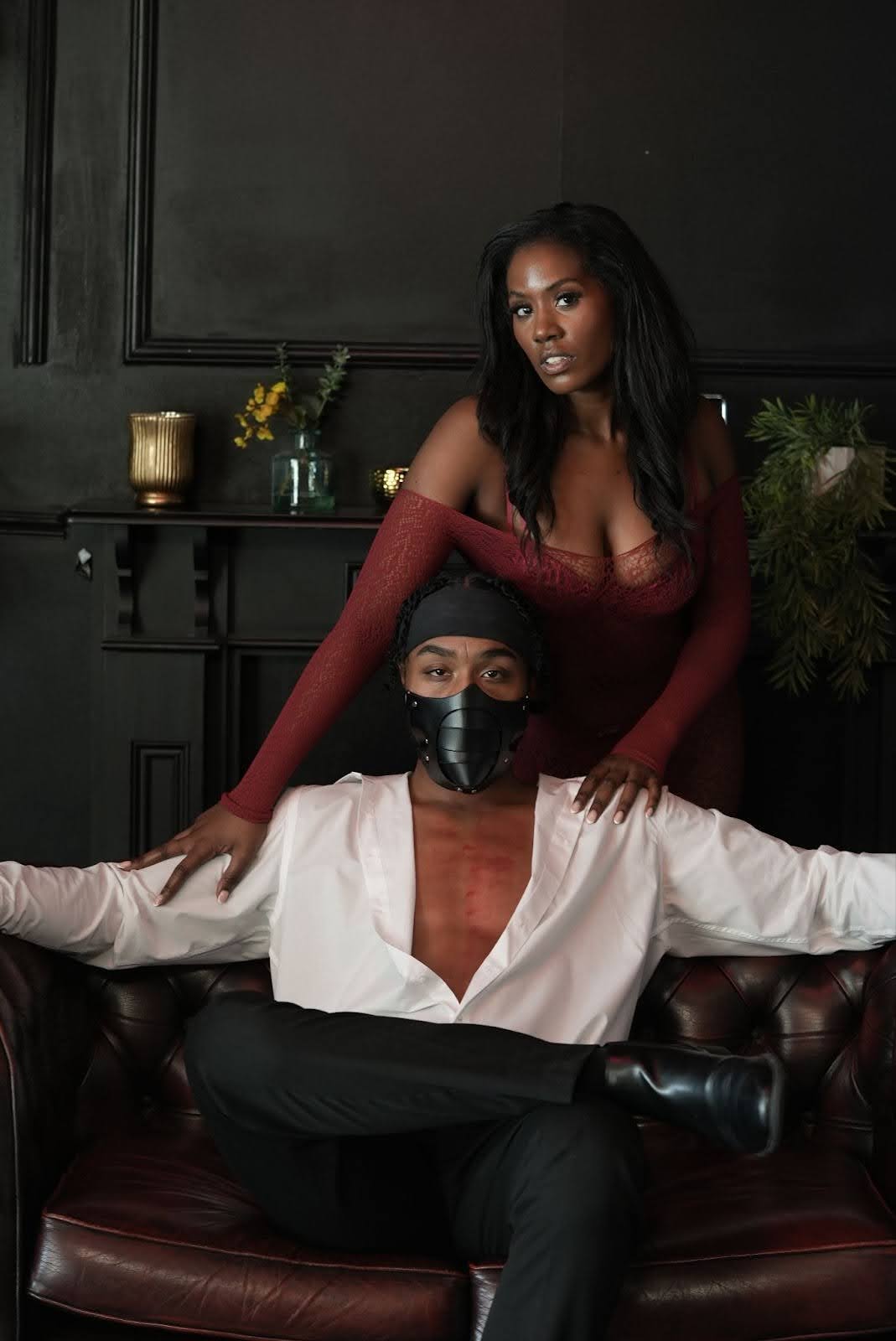
You've seen the terms thrown around, sometimes interchangeably, sometimes in ways that clearly don't mean the same thing. Someone on Reddit describes their "FLR" and it sounds nothing like what someone else calls "femdom." Meanwhile, "BDSM" gets used as a catch-all for anything that isn't missionary-with-the-lights-off.
It's confusing. And the confusion matters, because when you can't name what you want, it's a lot harder to find it, or ask for it.
So let's untangle this. Not with textbook definitions, but with what these terms actually mean in practice, in real relationships, in real life.
BDSM: The Big Umbrella
BDSM stands for Bondage, Discipline, Dominance, Submission, Sadism, and Masochism. It's not one thing, it's a category. Think of it like "sport." Football is a sport. Swimming is a sport. They share almost nothing in common except that they both involve a body and some rules.
BDSM is the same. It covers an enormous range of consensual dynamics and activities, from a couple who occasionally introduces power play into their bedroom to people who structure their entire lives around negotiated power exchange. Some BDSM is sexual. Some isn't. Some is a weekend thing. Some is 24/7.
The key word is consensual. Everything under the BDSM umbrella is negotiated, agreed upon, and built on trust. That's what separates it from abuse, not the activities themselves, but the presence of enthusiastic, informed consent from everyone involved.
If you're reading this and thinking, "Okay, but where do I fit in that?", that's exactly the right question. BDSM is the map. Femdom and FLR are specific locations on it.
What Femdom Actually Means
Femdom, short for female domination, is a dynamic where a woman holds the dominant role. That's it. That's the core of it.
But "holds the dominant role" can look wildly different depending on the people involved. For some couples, femdom is something that happens in the bedroom, she takes charge, she sets the pace, she decides what happens and when. For others, it extends into the relationship itself, she leads, he follows, and both of them are happier for it.
Here's what femdom is not: a personality type that comes with a costume. The cultural image, all severity and stilettos, is a fantasy aesthetic, not a job description. Dominant women are funny, soft, uncertain sometimes, brilliant, messy, kind. They're people who happen to prefer being in charge. Some of them love the theatrical side. Some of them just want a partner who listens the first time.
Femdom sits inside the BDSM umbrella because it involves power exchange. But it's a specific flavour, one where the woman is the one holding the power. A man can be dominant in BDSM too (that's maledom). Femdom centres her.
The important distinction: femdom can be purely sexual, purely relational, or both. It doesn't require whips. It doesn't require a contract. It requires two people who agree that she leads.
What a Female-Led Relationship Actually Looks Like
This is where things get interesting, and where the most confusion lives.
A female-led relationship (FLR) is a relationship structure where the woman is the primary decision-maker. Not just in the bedroom. In the relationship. She might manage the finances. She might have final say on big decisions, where to live, how to spend, what the priorities are. He supports, contributes, and follows her lead.
An FLR can include femdom. It can include BDSM. But it doesn't have to include either.
Plenty of couples in female-led relationships would never use the word "kink" to describe what they do. To them, it's just… how their relationship works. She's better at leading. He's happier supporting. They tried the traditional model and it didn't fit, or they never tried it at all because this always made more sense.
Day-to-day, an FLR might look like:
- She decides the household budget and he manages the tasks she assigns.
- She chooses where they go on holiday. He plans the logistics.
- She sets expectations for how the home runs. He meets them, not because he's forced to, but because he wants to.
- They make decisions together, but when they disagree, her call is final.
None of that requires a scene. None of it requires a safeword. It's a relationship model, like any other, built on communication, respect, and the understanding that this structure makes both people thrive.
FLR exists on a spectrum. Some couples have a gentle lean, she leads most decisions, he has equal input on some. Others have a more defined structure where her authority is explicit and comprehensive. Neither version is more "real" than the other. The only thing that matters is that both people chose it freely and both people are getting what they need.
Where They Overlap, and Where They Don't
Picture three circles that partially overlap, like a Venn diagram.
BDSM is the largest circle. It contains everything involving consensual power exchange, kink, and negotiated dynamics.
Femdom sits partly inside BDSM. The sexual and scene-based aspects of femdom are clearly BDSM territory. But femdom-as-a-relational-preference, "I want a partner who lets me lead", can exist without any BDSM activity at all.
FLR overlaps with both, but also extends outside them. An FLR can be entirely vanilla in the bedroom and still be deeply female-led in every other way. It can also include intense femdom dynamics. The relationship structure is the defining feature, not the activities.
Here's a quick way to think about it:
- BDSM answers: What kinds of dynamics and activities are we into?
- Femdom answers: Who holds the power in this dynamic?
- FLR answers: How is our relationship structured day-to-day?
A couple can be in an FLR with no BDSM at all. A couple can practise femdom only in the bedroom and have an otherwise egalitarian relationship. A couple can do all three, an FLR with femdom dynamics and BDSM scenes woven through their life together.
None of these combinations is better or more authentic than the others. What matters is that you know what you want, so you can communicate it clearly, to yourself, and to the person you're building something with.
Why the Labels Matter (and When They Don't)
Labels get a bad reputation. "Why do we need to put everything in a box?" Fair question. But here's the thing: when you're searching for a partner who wants the same dynamic you do, language is everything.
If you tell someone you want "BDSM," they might picture a dungeon. If you tell them you want an "FLR," they might picture a 1950s household in reverse. If you say "femdom," they might picture something they saw online that has nothing to do with your actual life.
Getting specific about what you mean, "I want a relationship where she leads the big decisions and I support her vision" or "I want a partner who takes charge in the bedroom but we're equals outside of it", cuts through the noise. The labels are shortcuts, but the conversation underneath them is what builds the relationship.
This is one reason why dating spaces designed for this community matter. On a mainstream app, you're trying to compress an entire relational philosophy into a bio line and hoping the right person decodes it. On platforms built around female-led dynamics, like Chyrpe, where women set their own rules for how they're approached from the very first interaction, the structure itself communicates the values. You don't have to explain that she leads here. The design already says it.
Finding Your Version
Maybe you read this and one term clicked immediately. Maybe you're still somewhere in the overlap, figuring out which parts resonate. Both are fine.
The community isn't a hierarchy where FLR is the "lite version" and BDSM is the "advanced level." They're different dimensions of the same core idea: that relationships work best when both people consciously choose their roles instead of defaulting to whatever society handed them.
Start with what feels true. Talk about it with your partner, or with the person you're hoping to find. Use the words that fit, discard the ones that don't, and remember that your dynamic doesn't need to match anyone else's definition to be real.
You know what you want. Now you have the language for it.