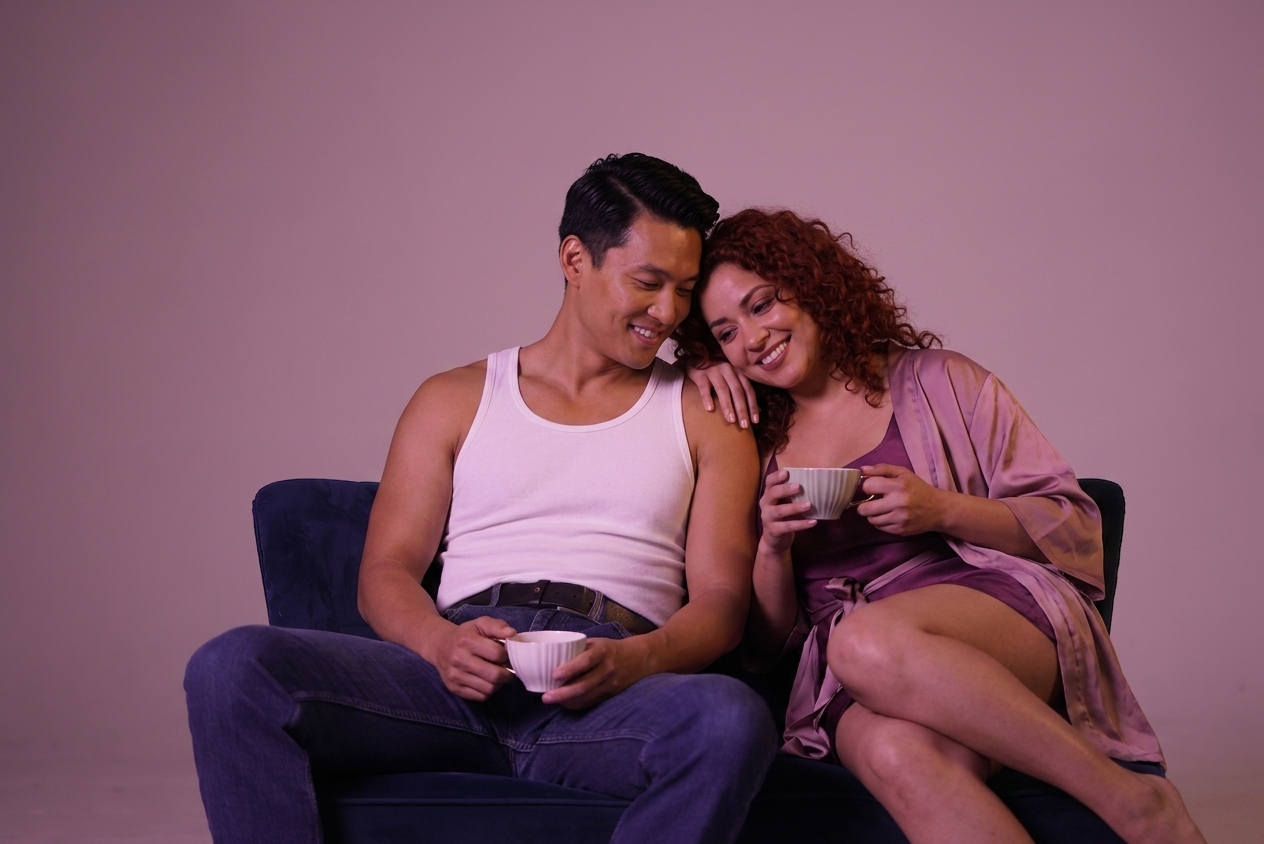
You're not broken. You're not missing a piece. And you're definitely not "not submissive enough."
If you've ever scrolled through kink forums or dating profiles and felt like submission comes with a prerequisite list, pain tolerance, impact play, endurance, and quietly thought that's not me, this is for you. You belong in this conversation. Not on the edges of it. Right in the middle.
The idea that submission requires pain is one of the most persistent myths in the community, and it's kept a lot of good people standing outside a door that was always open to them.
Why You Think You Don't Fit
Here's what probably happened. You discovered something about yourself, a pull toward surrender, toward devotion, toward letting someone else lead. Maybe it showed up in a relationship. Maybe it was a quiet realisation at 2am. Either way, you knew.
Then you went looking for your people. And what you found was a version of submission that didn't look like yours. Forums full of pain thresholds and endurance stories. Profiles listing impact play and discipline as baseline expectations. A visual culture drenched in imagery that made you think I want to kneel, but not like that.
So you started wondering if you were really submissive at all. Or if you were just… something else. Something without a name.
You're not something else. You're a submissive who doesn't centre pain. That's not a contradiction, it's just a different coordinate on a very wide map.
What Submission Actually Looks Like Beyond Pain
Pain is one expression of power exchange. It's not the definition of it.
Submission, at its core, is about the transfer of control. It's choosing to follow someone else's lead, not because you're weak, but because giving that trust to the right person feels like the most honest version of yourself. Pain can be part of that exchange. So can a hundred other things.
Service submission is one of the most common dynamics that has nothing to do with pain. It's built around acts of care, anticipating what she needs, handling the details she shouldn't have to think about, making her life easier and more beautiful through consistent, attentive effort. Think: preparing her morning exactly the way she likes it. Managing logistics so she can focus on what matters to her. Being the person who remembers, follows through, and never needs to be asked twice.
As one community writer put it, the key traits of a service submissive, reliability, attentiveness, proactive care, can be learned and developed. They're skills, not personality types. If you're drawn to this, you can grow into it.
Emotional surrender is another. Some dynamics are built entirely around vulnerability, being open, being honest, letting her see the parts of you that you've armoured up for everyone else. The power exchange lives in the intimacy, not the intensity.
Gentle femdom, sometimes called soft domination, is an entire corner of the community built around warmth, control, and tenderness. The dominance is real. The authority is real. But the expression is nurturing rather than harsh. She leads with a firm hand and a soft voice. If that makes your chest tighten in recognition, you already know this is yours.
And then there's devotional submission, where the dynamic is less about specific acts and more about orientation. You're not performing tasks or enduring sensations. You're offering yourself as a gift, following her lead with your limits and consent intact, trusting her to shape the experience. It's reverence, not transaction.
None of these require pain. All of them are real submission.
The Spectrum Is Wider Than the Stereotypes
The reason the stereotypes persist is simple: the loudest version of anything becomes the default image. Pain-focused dynamics are visually dramatic, easy to depict, and culturally recognisable. They make for compelling content. So they dominate the representation.
But talk to anyone who's been in the community for more than a year and they'll tell you, the range of what people actually practise is enormous. There are dominant women who have zero interest in causing pain. There are dynamics built entirely around protocol, service, and emotional connection. There are relationships where the power exchange is so woven into daily life that an outsider wouldn't even clock it.
A professional dominatrix in Toronto wrote about her own journey from being known for extreme intensity to embracing what she calls a "Soft Domme" identity, realising that her authentic expression of dominance was more controlled, more compassionate, and no less powerful. If dominant women themselves are finding their way to gentler expressions of power, it stands to reason that submissive men can too.
The community isn't one room with one set of rules. It's a sprawling house with dozens of rooms, and the one you're looking for exists. It's just quieter than the others.
How to Find Partners Who Want What You're Offering
This is where it gets practical. Knowing you belong is step one. Finding someone who wants exactly what you bring is step two.
Be specific early. The biggest mistake submissive men make on dating apps and in personal ads is being vague about their dynamic. "I'm submissive" tells a dominant woman almost nothing. "I'm drawn to service-based dynamics, I want to make your life easier, not perform for pain" tells her something. Specificity isn't limiting. It's magnetic. The right person reads that and thinks finally, someone who knows what he wants.
Lead with what you offer, not what you avoid. There's a difference between "I'm not into pain" and "I'm into service and emotional surrender." The first defines you by an absence. The second defines you by a presence. Dominant women are drawn to men who know what they bring to the table, not men who hand over a list of exclusions.
Look for spaces designed for nuance. Mainstream dating apps flatten everyone into the same swipe-based format. There's no room to communicate the texture of what you want. Apps built for this community, like Chyrpe, where every first message requires a thoughtful written approach, give you space to actually say who you are.
Don't apologise for your boundaries. You'll meet people who think submission without pain isn't "real" submission. They're wrong, but more importantly, they're not your people. The dominant woman who's right for you isn't going to need convincing that your submission counts. She's going to recognise it immediately, because it's exactly what she's been looking for.
You're Not Less, You're Specific
The submissive men who struggle most aren't the ones who don't know what they want. They're the ones who've been told that what they want doesn't count.
It counts.
Service counts. Devotion counts. Emotional vulnerability counts. Quiet, consistent, attentive presence counts. The desire to follow her lead, to make her life better, to surrender control in ways that have nothing to do with pain, that's not submission-lite. That's submission with a different centre of gravity.
You don't need to earn your place in this community by tolerating things that don't resonate with you. You earn it by showing up honestly, knowing what you offer, and finding the person who's been waiting for exactly that.
She's out there. And she doesn't want to hurt you. She wants to lead you.